

Sanctuary and Strain
Comparative Welfare, Housing Provision, and Fiscal Exposure Among Major Hosts of Ukrainian Refugees


This is a thread synthesising published data on the current status of Ukrainian refugees displaced abroad, predicted trends to 2027–28, comparative assessment of the largest host countries’ responses, and cost burdens per host country.
All figures are drawn from authoritative international sources where available, and uncertainties are highlighted by Beefy.
Ukrainian Refugees Abroad: Current State and Quantitative Assessment
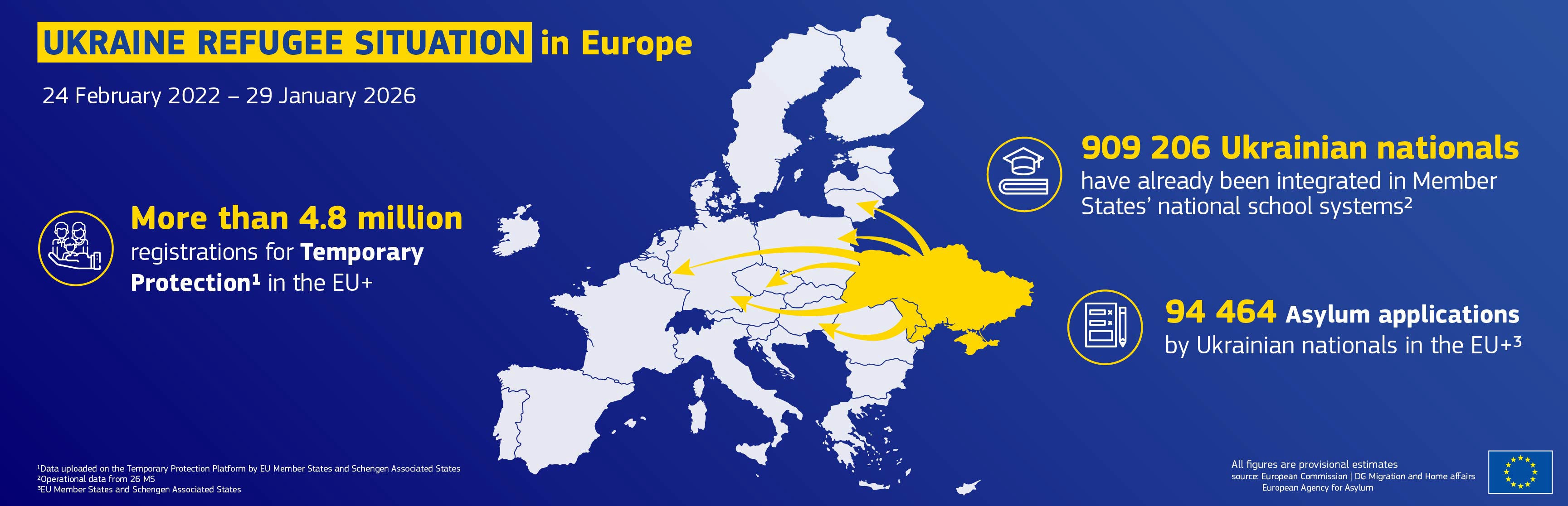
The Russian Federation’s full-scale invasion of Ukraine since February 2022 has precipitated one of the largest refugee crises in Europe since the Second World War. As of late 2025, a substantial contingent of Ukrainians remain forcibly displaced internationally.
According to Eurostat, approximately 4.35 million non-EU citizens from Ukraine were under temporary protection in the European Union at the end of 2025, reflecting a continuation of migration flows initiated earlier in the conflict.
Broader data also suggest circa 6.9–7.0 million Ukrainians have left Ukraine altogether as refugees or asylum-seekers by the same period, although estimates vary by source and methodology.
This discrepancy stems in part from differences in inclusion criteria (e.g., temporary protection recipients vs. all recorded refugees). Aggregated United Nations High Commissioner for Refugees (UNHCR) data indicate that between 5.2 million and 6.8 million refugees from Ukraine were registered globally as of 2025, with most residing in European countries outside Ukraine.
Statistical reporting further underscores the preponderance of women and children among these refugees, as martial law restrictions have limited the departure of military-aged men.
Comparatively, internal displacement remains significant: approximately 3.6–3.8 million people remain displaced within Ukraine’s borders owing to ongoing hostilities, compounding international displacement figures.
Predicting Trajectories to 2027–28
Forecasting future refugee stocks requires careful consideration of conflict intensity, return migration, and host country policy environments. Recent macroeconomic projections by the National Bank of Ukraine anticipate a moderation in outward migration coupled with gradual returns beginning in 2026, including a net return of 200,000 individuals in that year and a projected 500,000 returns in 2027.
However, conflict persistence and lack of durable peace agreements suggest that significant numbers of refugees will continue to reside abroad through at least 2027. If current trends hold, global refugee stocks could remain near 6.5 to 7.5 million by the end of 2027, with a modest decline in EU temporary protection recipients to an estimated 3.8 million by late 2026. Given parallel global displacement pressures and limited safe return prospects, a stabilisation rather than a precipitous decline in numbers through 2028 is the more conservative projection.
Comparative Host Country Responses
Scale and Reception
By mid-2025, Germany stood as the largest host, with reported figures exceeding 1.2 million Ukrainian refugees, followed by Poland (~970,000) and the Czech Republic (~390,000) among EU member states. Beyond the EU, significant Ukrainian populations have also been documented in the United States, United Kingdom, and other advanced economies, though detailed asylum and protection data vary by national system.
Financial Assistance and Housing Provision
Host country approaches to financial support and housing have diverged markedly.
Germany implemented extensive temporary protection benefits, including access to welfare and housing subsidies; Berlin alone spent over €20 billion on accommodation and integration of Ukrainian refugees, illustrating a substantial fiscal commitment.
Poland relaxed legal stay requirements and facilitated access to ID numbers, employment, and healthcare. However, it terminated certain cash allowances and ceased some host compensation schemes, reflecting evolving policy priorities.
Hungary imposed restrictions on accommodation for specific groups of refugees and provided relatively modest monthly financial allowances (~€55 plus child supplements).
In terms of employment integration, data indicate that Poland has comparatively high employment rates among Ukrainian refugees, one indicator of socio-economic inclusion, while parts of Western Europe, such as Spain and Switzerland, have exhibited lower employment absorption.
Quality and Equity
Crucially, the quality of reception varies. Some states provide comprehensive welfare protections, language and employment programs, and integration pathways, while others offer only basic subsistence support or create administrative barriers to social services. These differences underscore the unequal burden-sharing within the EU and beyond.
Cost Burdens and Per Capita Considerations
Quantifying the financial cost per country is challenging, as expenditures encompass direct welfare, housing, integration, education, and healthcare services.
Germany’s €20 billion-plus expenditure reflects the largest aggregate cost burden, driven by its status as primary host.
Poland’s refugee response has been substantial relative to its GDP, with Ukrainian refugees constituting between 0.7% and 1.1% of national output in 2023 according to employment and welfare assessments.
Czech Republic data indicate that refugees have contributed positively to public finances through taxes, sometimes exceeding welfare outlays, although housing subsidies and social support remain significant.
Comparative per capita burdens are highest where refugee populations represent a larger share of the national population (e.g., Poland, Baltic states). In contrast, larger economies may absorb costs with less relative strain but higher absolute spending.
Incorporating the United Kingdom and the United States into the Ukrainian Refugee Crisis Analysis
Status of Ukrainian Refugees in the UK and USA
United Kingdom
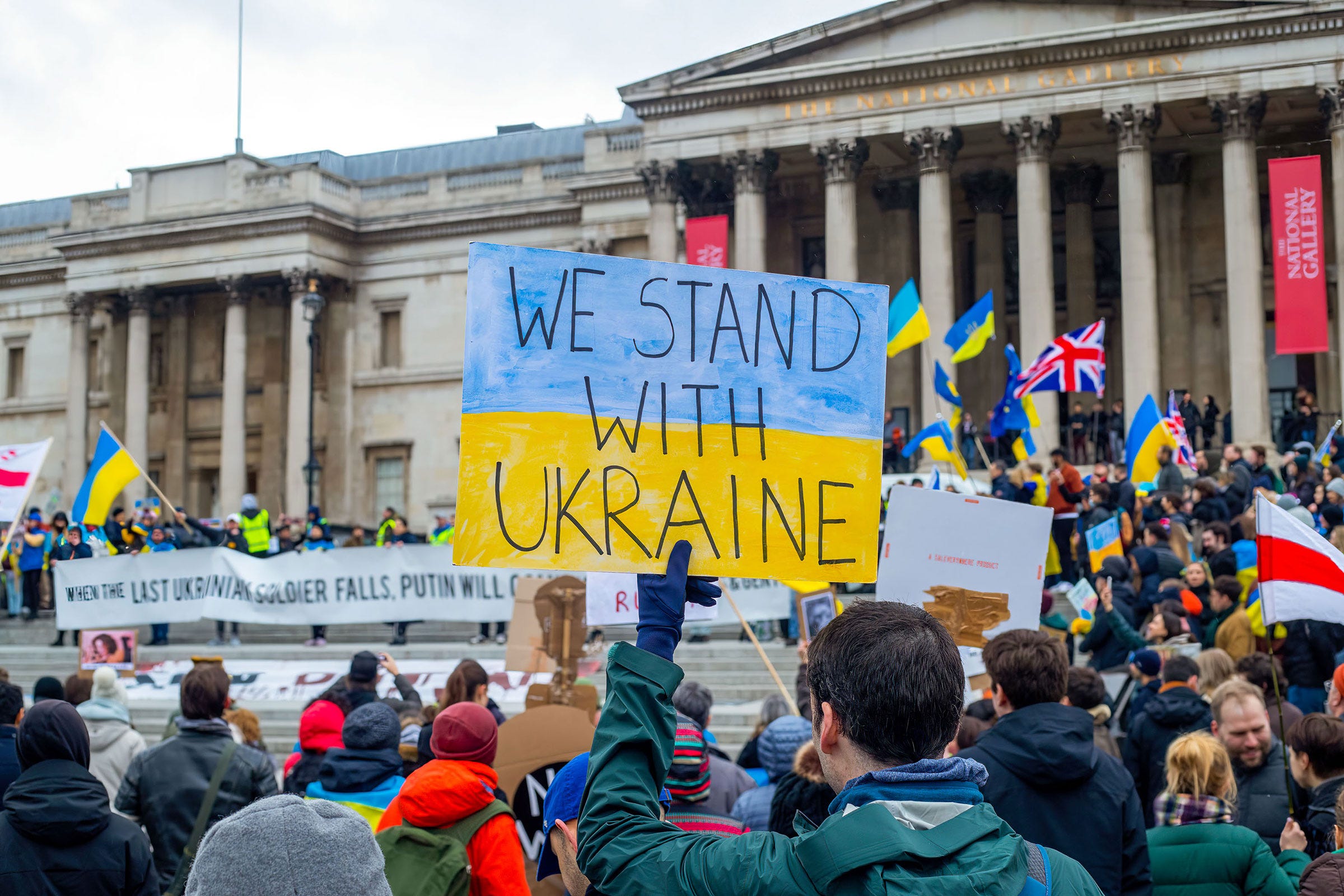
The United Kingdom has emerged as a significant host outside continental Europe. According to Euronews, the UK had an estimated 254,000 Ukrainian refugees residing in the country as of early 2025 under various schemes, including Homes for Ukraine and the Ukraine Family Scheme.
Support for Ukrainians in the UK has primarily been delivered through two official policy instruments:
Homes for Ukraine Scheme: This programme enables private households to sponsor Ukrainian nationals to live in the UK, with hosts receiving monthly payments (e.g., £350/month) while refugees receive access to public services.
Ukraine Family Scheme: Allows Ukrainians with family connections in the UK to enter and reside under family migration rules, though councils receive comparatively less direct funding under this route.
Charitable organisations such as the British Red Cross have supported more than 192,000 displaced Ukrainians with information services, psychosocial support, and help with housing and immigration navigation.
Despite these measures, housing insecurity has been a chronic issue. Reports indicate thousands of Ukrainian families are at elevated risk of homelessness due to the breakdown of sponsorship arrangements and difficulties securing private rental housing in a constrained market.
United States of America
The United States’ response has been markedly different due to its geographic distance and distinct legal frameworks. Two principal programmes have governed Ukrainian arrivals:
Uniting for Ukraine (U4U): A humanitarian parole pathway allowing U.S.-based sponsors to support the entry of Ukrainian refugees into the country. As of early 2024, the programme facilitated approval of over 236,000 U4U cases and the arrival of more than 187,000 refugees.
Temporary Protected Status (TPS): Administered by the Department of Homeland Security, TPS has been extended to Ukrainians already present in the U.S., allowing approximately 103,700 refugees to re-register under its terms as of early 2025.
However, recent policy uncertainty has cast doubt on the future of legal protections for Ukrainians in the U.S, with reports suggesting that thousands risk losing lawful status or work authorisation without legislative or administrative action.
Estimates of the overall Ukrainian refugee population in the U.S. vary by methodology, but scholarly compilations place the figure in the hundreds of thousands rather than millions. In one comparative dataset, the U.S. hosted about 271,000 Ukrainian refugees (approximately 4 percent of the global total) as of mid-2024.
Comparative Policy Assessment
Financial Assistance and Integration Support - United Kingdom
The UK’s welfare provision for Ukrainian refugees has involved a combination of national welfare benefits and targeted funding:
Refugees under Homes for Ukraine can access Universal Credit and other UK welfare benefits depending on individual circumstances.
Local authorities have received hundreds of millions of pounds in additional funding (e.g., £150 million for housing support alone) to facilitate stable accommodation and reduce risks of homelessness.
Nonetheless, research suggests that due to high housing costs and reductions in certain council payments, many refugees face barriers to securing long-term housing autonomy.
These measures have been politically controversial, with criticism directed at the withdrawal or reduction of certain allowances and concerns about long waiting times for asylum decisions.
United States of America
The U.S. response does not confer formal refugee status for Ukrainian arrivals; rather:
U4U participants and TPS beneficiaries are eligible for mainstream services chiefly through the Office of Refugee Resettlement (ORR), including cash assistance (e.g., Temporary Assistance for Needy Families, TANF), medical support (Medicaid), food support (SNAP), job placement, and language training.
Eligibility is contingent on programme enrolment, and legal uncertainty over renewals has raised concerns about access to services and continuity of support.
Refugee resettlement infrastructure in the U.S. historically focuses on broader programmes that vary by state, resulting in differential access to housing and social services across jurisdictions.
Because the U.S. does not explicitly grant refugee status under U4U but provides humanitarian parole and TPS protections, the level of formal welfare support (e.g., entitlement to housing assistance) is generally less robust than in countries with explicit temporary protection regimes.
Comparative Strengths and Shortcomings
Best Performing in Terms of Financial Support and Housing Stability
Germany and Poland are often cited for integrating refugees into labour markets quickly and providing access to social assistance and housing services, with Germany’s welfare system absorbing large numbers at scale.
Within the broader European response, countries with extended temporary protection regimes generally score higher in welfare entitlements and integration supports.
United Kingdom
The UK lies in the intermediate range: while offering substantive welfare support and pathways into employment, it has faced housing shortages and policy retrenchment that limit long-term stability for refugees.
United States of America
The U.S. response is comparatively less comprehensive, primarily owing to the limited legal protections and variability in access to federally funded services for parolees. Expanded benefits are available but require separate eligibility and are not universally guaranteed as in EU temporary protection frameworks.
Estimated Cost Burdens by Country
Precise, up-to-date estimates of host country expenditures on Ukrainian refugees are difficult to compile independently because budgeting spans multiple agencies and fiscal years. Nevertheless:
United Kingdom: Government data indicates that the UK spent approximately £2.8 billion (about 20 % of its aid budget) on refugee support by 2024, covering humanitarian and integration costs.
United States: Funding appropriated to refugee support, including through the Ukraine Security Supplemental Appropriations Act, allocated hundreds of millions to refugee assistance programmes, though exact totals depend on annual appropriations and federal budgeting cycles.
Germany: Outlays exceed €20 billion in housing and integration expenditure, reflecting both high refugee numbers and generous welfare entitlements.
Because national budgets differ in scale and fiscal capacity, raw expenditure figures alone do not capture relative burden; per capita costs and expenditures as a share of GDP or public spending provide a more nuanced picture.
For example, although the U.S. spends less overall on Ukrainian refugee programmes than Germany, its expenditures are distributed across broader federal systems and additional homeless, employment, and healthcare support structures.
In 2026, the estimated cost burdens for supporting Ukrainian refugees and internally displaced persons (IDPs) remain high, with global humanitarian appeals for 2026 reaching over $2.3 billion for 4.1 million people
Key costs include $387.9 million for UNICEF’s refugee and internal response, $42 million for healthcare, and substantial, though reducing, accommodation expenses in Europe, such as €607 million in Ireland.
Key 2026 cost estimates for Ukrainian refugees and displaced persons
Global Humanitarian Aid: The 2026 Humanitarian Needs and Response Plan requires $2.304 billion to support 4.1 million vulnerable displaced and conflict-affected people.
UNICEF Response: UNICEF requires $387.9 million ($350 million inside Ukraine, $37.9 million for refugees) for 2026 to support children and families.
Healthcare Costs: The World Health Organisation (WHO) is seeking $42 million to maintain healthcare for 700,000 people.
European Accommodation Costs: In Ireland, state spending on accommodation for Ukrainian refugees is projected at €607 million for 2026, nearly half of the 2024 spending.
Education Support: In the Netherlands, providing student finance to Ukrainian refugees is estimated to cost €12 million in 2026, rising to €87 million by 2029.
Long-term Economic Strain: Germany continues to face significant annual costs, with estimates around €9–10 billion annually.
Reconstruction Costs: The total cost to rebuild Ukraine over the next decade is estimated at $588 billion.
These costs are driven by the ongoing conflict, which enters its fifth year of the illegal and genocidal invasion of Ukraine, necessitating sustained support for both refugees in host countries and displaced populations within Ukraine.
Conclusions
The Ukrainian refugee crisis remains a protracted humanitarian challenge, with millions abroad and millions more internally displaced.
While current refugee stocks appear to be stabilising rather than rapidly declining, forecasts to 2027–28 suggest sustained displacement given ongoing conflict. Host countries vary significantly in both the generosity of their assistance and the quality of integration support.
Germany, Poland, and the Czech Republic host the largest numbers and provide substantial resources, albeit through differing welfare models and political strategies.
Continued international cooperation and equitable cost-sharing will be critical to ensuring durable solutions and sustainable refugee support beyond the immediate emergency phase.
The inclusion of the United Kingdom and the United States in the analysis underscores the heterogeneity of host country responses to the Ukrainian refugee crisis. While European host states with temporary protection regimes generally offer stronger safety nets, both the UK and the U.S. demonstrate distinct approaches shaped by legal frameworks, welfare systems, and political contexts.
The UK’s intermediate model combines welfare integration with housing challenges, and the U.S. model—centred on humanitarian parole and TPS—provides essential protections but less comprehensive social support.
Future research and policy development would benefit from harmonised data on refugee outcomes and cost burdens to better assess the long-term impacts of displacement on host societies and refugees alike.
References and sources:
Here is Beefy’s consolidated reference list of authoritative URLs corresponding to the analysis of Ukrainian refugees globally, in the EU, Germany, Poland, Czech Republic, the United Kingdom, and the United States, including displacement numbers, policy frameworks, and fiscal costs. The sources are grouped thematically for clarity and academic usability.
Core Displacement and Refugee Numbers (Global & Europe)
UNHCR, Ukraine Emergency Data Portal
https://www.unhcr.org/emergencies/ukraine-emergency
UNHCR Europe Regional Data
https://www.unhcr.org/where-we-work/regions/europe
Eurostat, Temporary Protection for Persons Fleeing Ukraine
https://ec.europa.eu/eurostat/statistics-explained/index.php?title=Temporary_protection_for_persons_fleeing_Ukraine
European Commission, Extension of Temporary Protection
https://home-affairs.ec.europa.eu/news/commission-proposes-extend-temporary-protection-people-fleeing-war-ukraine-2024-06-11_en
Reuters, Ukrainians scattered across Europe
https://www.reuters.com/world/ukrainians-scattered-across-europe-trapped-limbo-by-war-2026-02-21/
Forecasts, Returns, and Migration Projections
National Bank of Ukraine, Migration and Labour Market Outlook
https://bank.gov.ua
Interfax Ukraine, Migration Return Projections
https://interfax.com/newsroom/top-stories/107624/
RBC Ukraine, Migration Flow Reporting
https://newsukraine.rbc.ua
Germany, Poland, Czech Republic (EU Host States)
Euronews, Refugee allowances and housing support across EU states
https://www.euronews.com/my-europe/2025/04/24/refugee-allowance-and-rent-compensation-heres-how-benefits-for-ukrainians-are-changing-in-
Kyiv Independent, Costs borne by Germany, Poland, Czechia
https://kyivindependent.com/poland-czechia-germany-ask-eu-to-help-cover-expenses-for-hosting-refugees-from-ukraine-bloomberg-reports/
Eurostat, Labour Market Integration of Ukrainians
https://ec.europa.eu/eurostat/web/products-eurostat-news
ANSA, Ukrainian Refugees in the EU (host country breakdowns)
https://www.ansa.it/nuova_europa/en/news/countries
United Kingdom
UK Government, Homes for Ukraine Scheme
https://www.gov.uk/guidance/homes-for-ukraine-scheme
UK Government, £150m Housing Support for Ukrainians
https://www.gov.uk/government/news/ukrainian-families-supported-into-own-homes-with-150m-funding
UK Parliament Commons Library, Aid and Refugee Spending
https://commonslibrary.parliament.uk/research-briefings/cbp-9663/
British Red Cross, Ukraine Response (UK)
https://www.redcross.org.uk/about-us/what-we-do/international/ukraine
Euronews, UK housing and allowance challenges
https://www.euronews.com/my-europe
United States of America
U.S. Department of Homeland Security, Uniting for Ukraine
https://www.uscis.gov/ukraine
U.S. Department of Homeland Security, Temporary Protected Status for Ukraine
https://www.uscis.gov/tps
HIAS, Comparative US–EU Refugee Policy Report
https://hias.org/wp-content/uploads/HIAS-US-Eur-Comparative-Report_Final.pdf
Office of Refugee Resettlement (ORR), Benefits and Services
https://www.acf.hhs.gov/orr
Global Refuge, Legal Status Risks for Ukrainians in the U.S.
https://www.globalrefuge.org/news/report-thousands-of-ukrainians-risk-losing-legal-status-as-war-enters-fourth-year/
Macroeconomic and Cost Context
World Bank, Ukraine Damage and Needs Assessments
https://www.worldbank.org/en/country/ukraine
OECD, Migration and Refugee Integration Indicators
https://www.oecd.org/migration/