

The Which Blair? Project
Tony Blair, Money, Power and the New Influence Machine
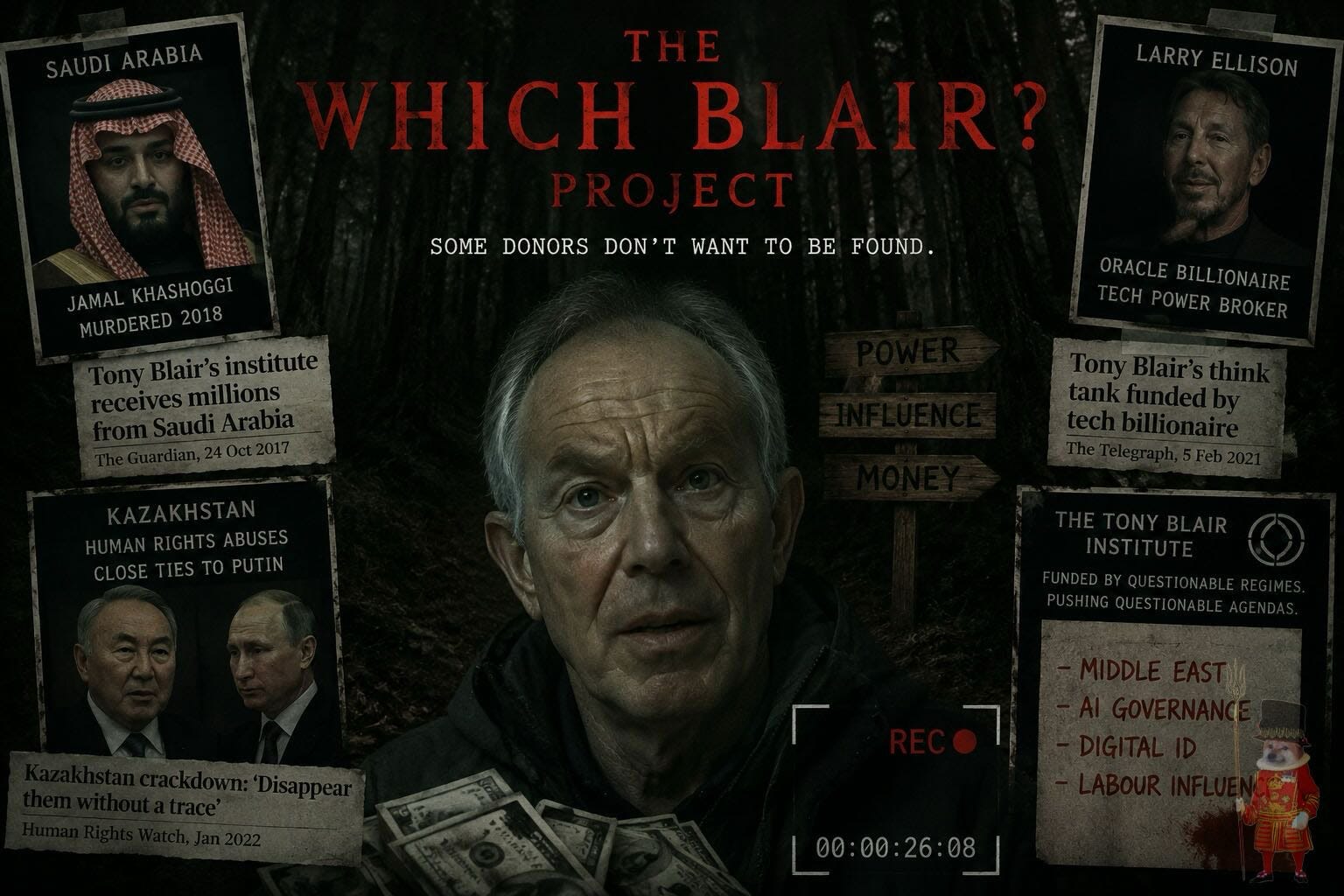
Blair’s climate “reset” and the question behind the curtain
In May 2025, Tony Blair placed himself back at the centre of Britain’s climate and political debate by arguing that the existing net-zero consensus needed a fundamental reset.
His case was presented in the familiar Blairite language of realism, technology, pragmatism and voter consent.
He warned that climate policy would fail if it relied on public sacrifice, lifestyle restraint or targets that voters could experience as cost, inconvenience or moral instruction. Instead, he argued for a more technology-led approach: innovation, AI, carbon capture, nuclear options, cleaner industrial systems and global-scale solutions.
On the surface, this sounded like a former prime minister offering hard-headed advice to a Labour government nervous about cost-of-living politics.
But the deeper question is not whether Blair’s essay contained any valid points. It is why this argument came from this particular figure, through this particular institute, at this particular moment.
Blair’s intervention landed in policy territory where his financial backers and institutional partners have direct interests.
His think tank is heavily associated with Larry Ellison’s funding orbit and Oracle’s world of cloud infrastructure, data systems, AI and health technology.
It has also had links with Saudi Arabia and other Gulf or fossil-fuel-adjacent power centres.
When Blair calls for a climate strategy less focused on restriction and more focused on technology, markets, data, energy systems and elite-led implementation, the argument overlaps uncomfortably with the interests of those surrounding his institute.
That is why Blair’s May 2025 essay should be treated as the doorway into a much larger investigation. The issue is not simply climate policy. It is influence. Who funds Blair? Who benefits from the policies he promotes?
Why do his preferred solutions so often align with the interests of tech billionaires, Gulf monarchies, authoritarian clients and global capital? Before accepting Blair’s arguments on net zero, AI, Labour strategy, Palestine or Middle East governance, the public should first examine the money behind the megaphone.
Blair’s Background - Building influence..
Since leaving office as UK Prime Minister in 2007, Tony Blair has built a global influence operation that is far larger than a conventional think tank.
The Tony Blair Institute for Global Change, known as TBI, presents itself as a policy and delivery organisation helping governments solve complex problems. Its critics see something more troubling: a private influence machine wrapped in the language of reform, funded by billionaires, governments, foundations, technology interests and states with severe democratic and human-rights deficits.
The central issue is not whether every TBI project is corrupt, nor whether every donor is malign.
Some of its funders are mainstream international institutions and philanthropic foundations.
The real concern is structural. Blair and TBI operate at the intersection of donor money, government consultancy, elite access, policy advocacy and personal political authority.
That means when Blair speaks on artificial intelligence, public-sector reform, NHS data, climate, Labour Party strategy, Gaza, Gulf states or Middle East governance, his arguments cannot be read as neutral elder-statesman commentary.
They must be read against the financial and geopolitical interests surrounding him.
The recent record is especially concerning.
TBI’s own financial statements show rapid growth, with 2024 turnover of about $161.3 million and most income coming from advisory work.
Its donor and partner lists include the Larry Ellison Foundation, Oracle, the Gates Foundation, Wellcome, the World Bank, UNDP, USAID and other major institutions. Investigative reporting has found that Larry Ellison’s foundation has donated or pledged hundreds of millions of dollars to TBI since 2021.
Ellison is not merely a philanthropist; he is the founder of Oracle, one of the world’s largest database, cloud and health-technology companies. TBI’s growing emphasis on AI, digital government, public data integration and health-data infrastructure sits uncomfortably close to Oracle’s commercial universe.
Blair’s Saudi and Kazakhstan relationships deepen the problem.
Blair’s rose tinted sponsorship glasses - but we remember Jamal Khashoggi.
Saudi Arabia is an absolute monarchy with a severe human-rights record and was responsible, according to US intelligence assessment, for an operation approved by Crown Prince Mohammed bin Salman to capture or kill Jamal Khashoggi. The UN special rapporteur’s inquiry described Khashoggi’s killing as a grave human-rights violation.
Yet reporting has shown that TBI continued advising and receiving money from Saudi-linked sources after Khashoggi’s murder.
Kazakhstan, meanwhile, is a repressive state with a long record of authoritarian governance and human-rights abuses. Blair’s earlier consultancy work for the Nazarbayev regime, reportedly worth millions, established a template: authoritarian rulers could buy Blairite language around reform, modernisation and international credibility.
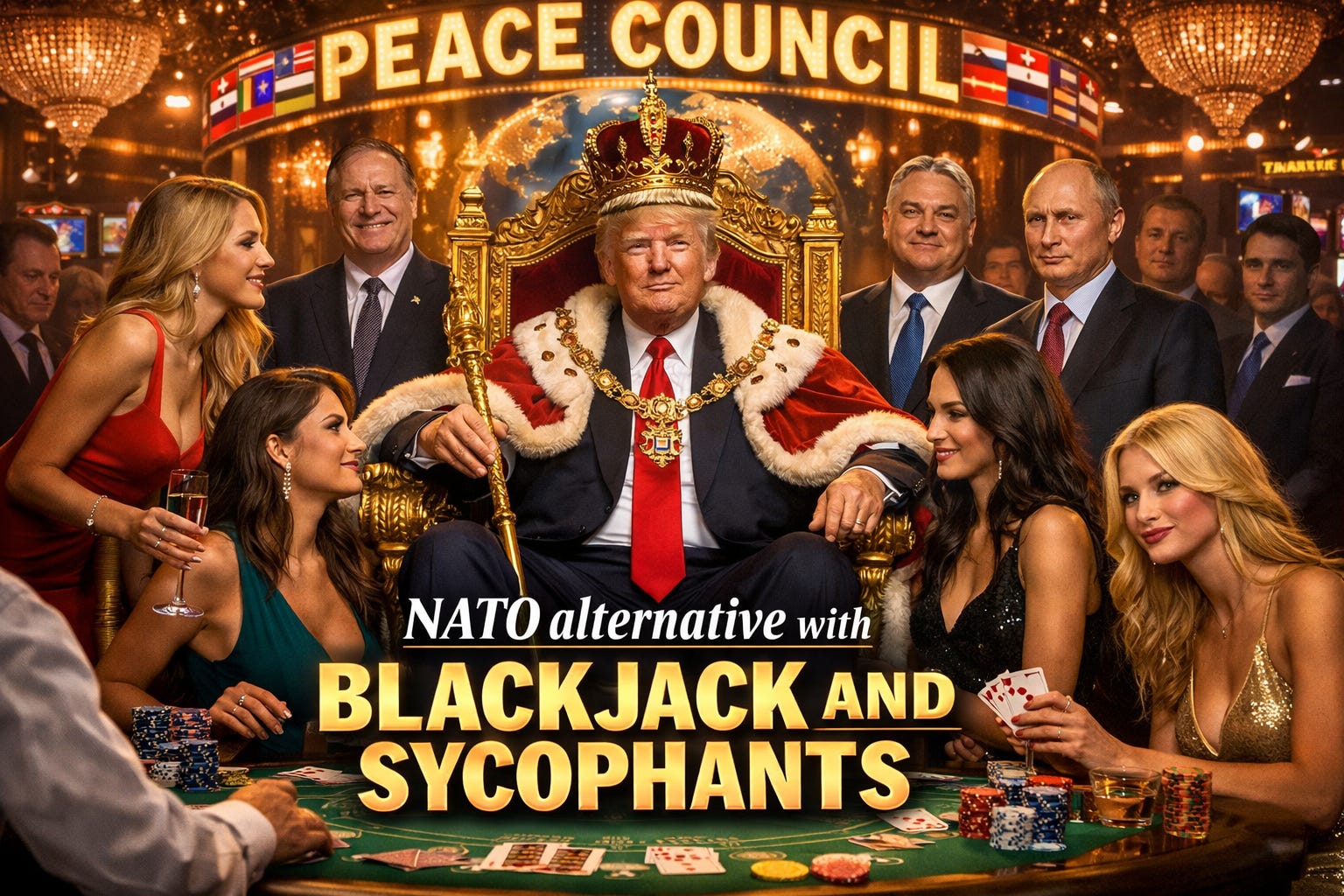
Bored of Peace?
The newest layer is Blair’s proximity to Donald Trump’s Gaza plans and the so-called Board of Peace.
Reuters reported that Blair met Trump, Jared Kushner and others in 2025 over post-war Gaza planning, and later reported that a US proposal envisaged a Board of Peace for Gaza chaired by Trump and including Blair. TBI itself published Blair’s statement welcoming the White House announcement.
Reporting by the Financial Times raised serious questions about the financing and opacity of the Board of Peace arrangements, including claims that the official World Bank-administered fund was empty despite headline pledges.
The evidence does not prove that Blair personally committed fraud.
It does, however, show that he attached himself to a politically explosive, Trump-linked, post-war Gaza governance project with weak transparency and vast reconstruction stakes.
The conclusion is stark. Blair should no longer be treated as a disinterested former statesman offering detached wisdom.
He is a political entrepreneur at the centre of a transnational influence network. His ideas may sometimes be serious, but the public should ask a simple question before accepting them: who benefits if Blair wins the argument?
From prime minister to global political entrepreneur
Tony Blair left office in 2007 with a rare commodity: global access.
Unlike most former politicians, he did not simply write memoirs, give speeches or take symbolic appointments. He built a web of advisory, philanthropic and policy organisations that turned access into an operating model.
The Tony Blair Institute for Global Change is the most important part of that system today. It describes itself as working with political leaders and governments to deliver policy change.
Its own material says it works with governments in dozens of countries, often inside the machinery of the state. That makes it more than a research institute. It is part think tank, part consultancy, part implementation partner and part diplomatic influence platform.
TBI’s financial scale confirms this. Its 2024 accounts reported turnover of about $161.3 million. In 2023, turnover was about $145.3 million. In both years, advisory work formed the overwhelming majority of income. That means TBI is not primarily funded as a passive research charity producing neutral papers from a university-style ivory tower.
Its centre of gravity is advisory work for governments, institutions and powerful partners.
Blair does not take a salary from TBI, according to its accounts. But this does not remove the conflict problem. He remains the institute’s executive chair, its defining public figure and controlling personality.
The accounts also show related-party connections with Blair’s wider commercial and personal support structures. The issue is therefore not simply whether Blair personally receives a pay cheque from every donor. The issue is whether his public authority, institutional machinery and donor-funded policy agenda are cleanly separable.
They are not.
A democratic society should be wary when a former prime minister controls a global advisory body that receives major funding from billionaires, consults for governments, publishes policy proposals, influences political parties and inserts itself into geopolitical settlements.
That is not ordinary commentary. It is power operating through a private institutional vessel.
The funding architecture: advisory income, donors and partners
TBI’s funding model is deliberately diversified. It receives income from advisory work, donors, foundations, governmental partners and institutional relationships.
Its published accounts name a range of donors and partners, including respected bodies such as the Gates Foundation, Wellcome, the World Bank, UNDP and USAID. These names give the organisation institutional legitimacy.
But legitimacy by association can obscure the darker question: who funds the parts of the machine that shape policy priorities? TBI’s accounts do not provide a simple donor-by-donor public table showing exact amounts from every major funder. That opacity matters. When an organisation seeks to influence public policy on AI, health data, climate and post-war governance, citizens should know who is paying, how much they are paying, and what policy fields those donors have interests in.
This is especially important because TBI is not merely analysing policy. It boasts of real-world influence. Its work has intersected with government digital policy, health-data proposals, climate policy and state modernisation. The institute’s own language around being embedded close to governments is intended as a selling point. But from a democratic-accountability perspective, it is also a warning flare.
A traditional think tank may publish a report and hope policymakers read it.
TBI goes further.
It advises governments, supplies implementation capacity and offers the authority of Blair’s personal network. The closer an organisation gets to actual state machinery, the higher the transparency standard should be. TBI’s current disclosure is not sufficient for the level of influence it seeks.
Larry Ellison, Oracle and the AI-policy problem
The most significant modern funder around Blair is Larry Ellison.
Ellison is the billionaire founder of Oracle. Oracle is a global technology company with major interests in databases, cloud infrastructure, health technology, public-sector digital systems and artificial intelligence.
TBI’s own 2024 accounts list the Larry Ellison Foundation as a donor or funding partner.
Oracle is separately listed as a partner. Investigative reporting has reported very large sums from Ellison’s foundation to TBI.
The Guardian reported that Ellison’s foundation gave TBI more than £52 million in 2023 and had promised a further $218 million. Lighthouse Reports estimated that Ellison put about $130 million into TBI between 2021 and 2023, with a further $218 million pledged thereafter. The Financial Times has also reported that Ellison-related pledges and donations to TBI since 2021 reached about $350 million.
The concern is not simply that a wealthy technology figure gave money to a think tank. The concern is the alignment between Ellison’s corporate interests and TBI’s policy agenda.
TBI has become one of Britain’s loudest advocates for AI-driven government reform. It has argued for a reimagined state, a National Data Library, a National Data Trust for health data, universal digital health records and greater use of public data for innovation.
These proposals are not minor technocratic tweaks. They point toward massive reorganisation of public data infrastructure, including health data, government services and citizen records.
Oracle is precisely the kind of company that could benefit from such a shift. Large-scale cloud contracts, database architecture, health-data systems and AI infrastructure are central to its commercial world. A policy environment that normalises centralised public data integration, AI delivery platforms and public-private health-data access is a policy environment in which Oracle-like companies thrive.
This does not prove Ellison dictated TBI policy.
But democratic accountability does not require proof of direct dictation before concern becomes legitimate. The concern is institutional capture by alignment: when the donor’s commercial universe and the think tank’s policy universe overlap so neatly that the distinction between public-interest reform and donor-congenial lobbying begins to blur.
Ellison’s politics also matter.
Reuters has described him as one of the few top technology executives openly supportive of Donald Trump, including hosting a Trump fundraiser in 2020. In January 2025, Ellison appeared at the White House alongside Trump for the launch of the Stargate AI infrastructure initiative involving Oracle.
Ellison has also been associated with enthusiastic views on AI-enabled surveillance and state-scale data systems.
This gives Blair’s AI agenda a sharper edge. When Blair argues for a radical AI state, when TBI promotes unified health data and data libraries, and when Oracle’s founder is one of TBI’s most important backers, the public should ask whether the conversation is really about democratic modernisation or about creating a state architecture that favours tech oligarchs.
NHS data, health records and the danger of technocratic capture
One of the most sensitive areas of TBI’s policy work is health data. TBI has argued that Britain should harness NHS data more effectively, including through a National Data Trust and universal digital health records. The institute has framed this as a way to improve research, innovation, productivity and patient outcomes.
There may be legitimate public-interest arguments for better health-data systems.
The NHS is fragmented, slow and burdened by outdated technology. Better interoperability could improve care. But health data is not ordinary data. It is among the most intimate forms of citizen information. It includes diagnoses, treatments, genetic risk, mental-health history, reproductive health, medication and vulnerabilities.
Once such data becomes part of large-scale public-private infrastructure, questions of consent, control, commercial access and surveillance become unavoidable.
The problem is therefore not that Blair talks about modernising the NHS. The problem is that his institute’s preferred solutions lean toward the world of large data integration, public-private innovation and AI infrastructure while it is heavily funded by a billionaire whose company has direct commercial interests in that same terrain.
Blair’s defenders may say this is simply pragmatic reform. But the language of pragmatism is often how elite influence disguises itself. “Modernisation” can mean better services. It can also mean opening public assets to private extraction. “Innovation” can mean medical breakthroughs.
It can also mean turning citizens’ health histories into commercial raw material. “AI readiness” can mean productivity. It can also mean building a permanent surveillance-administrative layer over public life.
This is why Blair’s AI and health-data interventions require extreme scepticism.
Not rejection by reflex, but scrutiny by default.
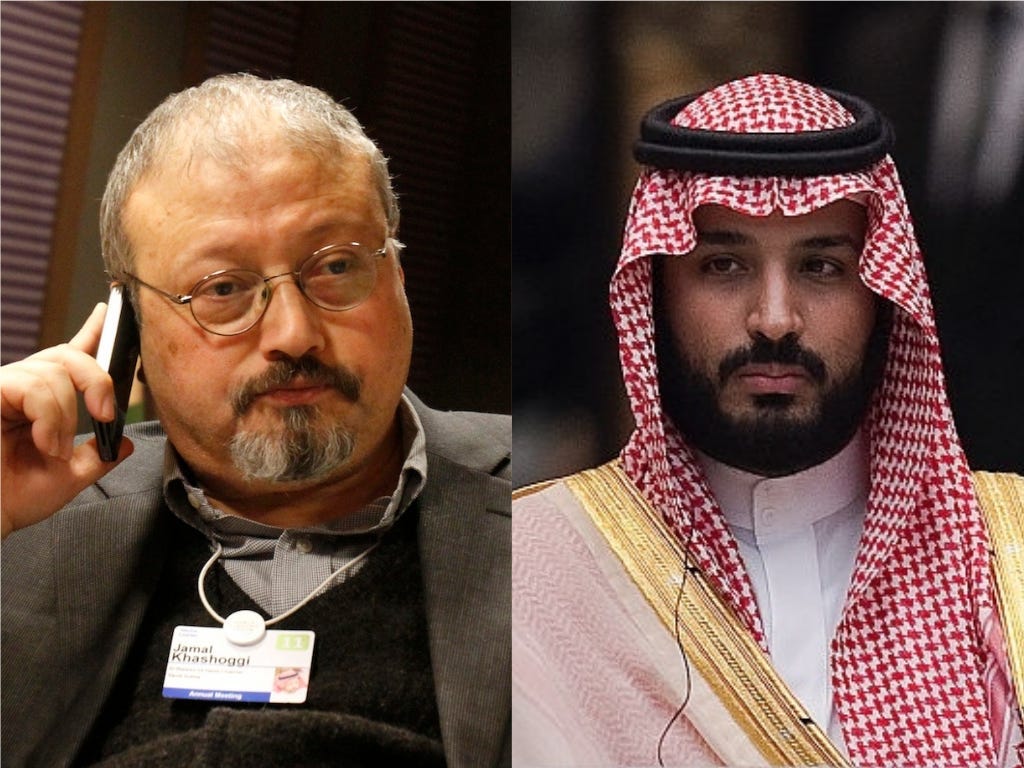
Saudi Arabia: reform-washing after Khashoggi’s brutal murder
Saudi Arabia is the clearest example of Blair’s willingness to engage with authoritarian power under the banner of reform.
The Financial Times reported in 2018 that a Saudi-linked donation to TBI came from Media Investment Limited, a subsidiary of Saudi Research and Marketing Group.
The Telegraph reported that Blair’s institute had been involved in a Saudi advisory arrangement worth about £9 million. The Guardian later reported that TBI continued advising and receiving money from Saudi Arabia after the murder of Jamal Khashoggi.
Jamal Khashoggi was a prominent Saudi dissident journalist and Washington Post columnist, was brutally murdered and dismembered on October 2, 2018, inside the Saudi consulate in Istanbul, Turkey. He had entered the consulate to obtain paperwork for his upcoming marriage.
Khashoggi was murdered in the Saudi consulate in Istanbul in October 2018.
The UN special rapporteur’s inquiry found that his killing and the disappearance of his body constituted grave human-rights violations. The US Director of National Intelligence assessed in 2021 that Crown Prince Mohammed bin Salman approved an operation to capture or kill him.
The Committee to Protect Journalists records the case as a murder by government officials with impunity.
Saudi Arabia’s broader political system is also not meaningfully democratic. Freedom House classifies Saudi Arabia as “Not Free”. Human Rights Watch has described severe repression, restrictions on dissent, abuses against activists and extensive control under Crown Prince Mohammed bin Salman.
Against this backdrop, Blair’s Saudi links cannot be brushed aside as ordinary diplomacy.
Diplomacy is conducted by accountable governments. Blair’s work was private influence work. When a former British prime minister’s institute continues engagement with Saudi Arabia after Khashoggi’s murder, the effect is reputational laundering.
It helps present the kingdom not as a brutal absolute monarchy but as a modernising state undergoing reform.
This is Blairism’s recurring moral problem. It treats engagement with authoritarian rulers as proof of seriousness. It frames access as influence, influence as reform, and reform as moral justification. But autocrats understand this game.
They do not pay former democratic leaders merely because they love policy advice. They pay for credibility, access, language and legitimacy.
Saudi Arabia’s interest in global image management is obvious. Its Vision 2030 agenda, sports investments, entertainment reforms, technology ambitions and diplomatic repositioning all require Western validation. Blair’s institute, with its language of governance and modernisation, fits neatly into that ecosystem.
Gulf politics, fossil interests and Blair’s climate interventions
Blair’s recent climate interventions should also be read against TBI’s Gulf links and work with hydrocarbon states. The Guardian has scrutinised Blair’s climate and net-zero interventions in light of the institute’s donors and fossil-fuel-adjacent relationships. TBI has worked with Middle Eastern and petrostate-linked contexts, including Saudi Arabia, the United Arab Emirates, Egypt around COP27 and Azerbaijan around COP29.
Blair has argued against what he sees as unrealistic or politically unsustainable approaches to climate policy. Some of that critique may resonate with voters worried about cost. But again, the question is who benefits.
A climate agenda that slows or softens net-zero commitments, emphasises technological fixes, promotes nuclear options, supports carbon markets and avoids direct confrontation with fossil-fuel producers is convenient for Gulf monarchies and hydrocarbon states.
It is also convenient for technology companies building energy-hungry AI infrastructure.
This is where Ellison and the Gulf interests begin to converge. AI data centres require enormous energy. Oracle has explored nuclear-powered data centre models, including small modular reactor concepts. TBI’s climate thinking has shown sympathy for technology-heavy pathways rather than simple fossil-fuel phase-out politics. That does not prove a hidden instruction.
It does show a pattern: Blair’s climate pragmatism repeatedly lands in territory favourable to wealthy fossil states and energy-hungry technology capital.
The danger is not merely that Blair may be wrong. The danger is that he may help reframe climate delay as sensible moderation while those funding or surrounding his institute benefit from delay, dilution or redirection.
Kazakhstan: the Nazarbayev precedent
Kazakhstan is an older part of Blair’s post-office story, but it remains essential because it reveals the template.
OCCRP reported that leaked emails showed Tony Blair Associates advising President Nursultan Nazarbayev’s government for about £5.3 million a year, with overall spending on Blair’s services estimated at more than £20 million.
Blair was reported to have helped Nazarbayev respond to Western criticism after the 2011 Zhanaozen massacre, in which Kazakh security forces killed protesters.
Blair has denied personally profiting in the way critics alleged and has said money supported charitable work. But the central ethical issue remains: a former British prime minister provided strategic advice to an authoritarian ruler after state violence against protesters.
This was not neutral development work.
It was reputation management for a regime.
Kazakhstan remains a state with serious democratic and human-rights concerns. Freedom House classifies it as “Not Free”. Human Rights Watch has reported abuses around protests, arbitrary detention, torture allegations and limits on political freedoms.
Kazakhstan’s relationship with Russia is complex.
It is not simply a Russian puppet state (which it is), and Kazakh leaders have at times avoided endorsing Moscow’s territorial claims in Ukraine. But Kazakhstan remains deeply tied to Russia through geography, trade, energy, security history and regional power structures. Reuters has reported continuing energy and strategic ties, including Russia’s role in a nuclear power project in Kazakhstan. It has just signed a deal with Putin in May 2026, for Russia to build a nuclear power plant, for example.
This matters because Vladimir Putin is under an International Criminal Court arrest warrant over the alleged unlawful deportation of Ukrainian children.
Blair’s Kazakhstan episode therefore foreshadowed a wider pattern. Autocratic or semi-autocratic regimes buy the language of reform.
Blair sells strategic credibility. The public receives a polished narrative about modernisation while the hard facts of repression recede behind the curtain.
Trump, Blair and the Gaza Board of Peace
Blair’s recent links to Donald Trump’s Gaza plans add a new and volatile chapter.
Reuters reported that Blair met Donald Trump at the White House in August 2025 over post-war Gaza planning, alongside figures including Jared Kushner.
Reuters later reported that Blair sought or was considered for a senior role in post-war Gaza governance under a Trump plan. A subsequent Reuters report said a US proposal envisaged a “Board of Peace” for Gaza, chaired by Trump and including Blair.
TBI then published Blair’s own statement welcoming the White House announcement and saying he was honoured to be appointed to the Executive Board. It’s life-long Chairman being a convicted felon, adjudicated rapist, bankrupt and protector of pedophiles.
This matters because Gaza is not an abstract policy laboratory.
It is a devastated territory whose future governance raises profound questions of Palestinian self-determination, occupation, reconstruction, displacement, sovereignty and international law.
The idea that Trump, Kushner, Blair and allied elites could sit atop a board shaping Gaza’s future is politically explosive.
The phrase “Peace Council swindle” is a mockery of a rules-based civilisation.
The evidence currently available supports serious criticism of opacity, elite self-dealing risk and weak governance. It does not prove, on the public material reviewed, that Blair personally committed criminal fraud. However, Financial Times reporting raised serious concerns about the Board of Peace’s funding structure, including the claim that the official World Bank-administered fund was empty despite headline pledges, while some donations may have flowed through alternative channels with weaker transparency.
That is enough to justify grave concern. The Gaza reconstruction economy will involve enormous sums. Any body overseeing or influencing it must have impeccable legitimacy, transparency and Palestinian consent.
A Trump-chaired board involving Blair, Kushner and other political-business figures fails that test before it begins.
Blair’s involvement also interacts with his Gulf relationships.
Gulf states are central to any Gaza reconstruction financing. Saudi Arabia, the UAE, Qatar and others have major geopolitical interests in the Palestinian question, Israeli normalisation, regional prestige and post-war influence.
A former British prime minister whose institute has taken Saudi-linked money and worked in Gulf policy circles cannot plausibly present himself as a neutral broker unless the financial architecture is fully transparent.
It is not.
Palestine, elite trusteeship and the danger of post-war colonial thinking
Blair’s Gaza role is troubling for another reason: it revives the old imperial habit of external trusteeship.
The assumption appears to be that Western and Gulf elites can design governance for Palestinians, administer reconstruction and decide who is acceptable to rule.
This is the language of peace, but it risks reproducing the logic of control.
Palestinians have already endured occupation, blockade, displacement, war and repeated denial of political agency. Any post-war structure that places Trump, Blair, Kushner or donor states above Palestinian democratic consent should be treated with suspicion. The issue is not whether Gaza needs reconstruction. It plainly does. The issue is whether reconstruction becomes a mechanism for political management, land control and commercial opportunity.
Blair’s history compounds this concern.
He was Prime Minister during the Iraq War (I will expand on that in a bit), he was later “Middle East envoy”, and then a private global adviser. As if a conflict of interest is the new norm then.
His record is not that of a neutral humanitarian mediator. It is that of a Western interventionist who repeatedly sees elite-designed governance projects as solutions to political crises.
In Palestine, that worldview is dangerous.
It risks treating sovereignty as a technical inconvenience, democracy as a later-stage luxury, and reconstruction as a boardroom challenge. If Blair is to have any role at all, the public must know who is funding the process, who has decision rights, who profits from contracts, and whether Palestinians have meaningful control over their own future.
Blair and the Labour Party: advice from inside the donor fog
Blair has recently expressed strong views about the UK Labour Party, including warnings about its political direction and arguments that Labour should adapt to the age of Trump, AI and voter impatience with conventional politics.
He has also urged Labour to rethink aspects of net zero and state reform.
Former prime ministers are entitled to opinions. Blair’s record in winning elections gives him obvious political experience.
But his current advice must be read through the financial structure around him.
When Blair tells Labour to move faster on AI, rethink net zero, embrace technological transformation and avoid alienating America or Gulf allies, these positions intersect with the interests of his strongest surrounding forces: Ellison and Oracle in AI; Gulf monarchies in energy and geopolitics; Trump-linked circles in US politics; and global capital in public-sector reform.
This does not make every Blair argument wrong.
But it makes them interested arguments. They are not coming from a retired statesman sitting outside power. They are coming from the head of an institute funded and partnered by actors with direct stakes in the policy outcomes Blair promotes.
Labour MPs and ministers should therefore treat TBI engagement as lobbying, not neutral policy advice.
The same applies to media outlets that platform Blair’s interventions. The question should not simply be “Is Blair right?” It should be “Whose interests are advanced by Blair’s version of modernisation?”
The democratic problem: influence without electoral accountability
The most serious concern running through Blair’s post-office career is democratic accountability.
Blair no longer holds elected office. He is not answerable to voters. Yet he can influence governments, parties, policy debates and international settlements through a private organisation funded by powerful donors and clients.
This creates a grey zone between democracy and oligarchy.
Autocrats like this grey zone because it lets them purchase Western respectability without submitting to democratic standards. Tech billionaires like it because it allows them to shape public-sector policy through philanthropic or advisory channels rather than direct lobbying alone. Governments like it because they can outsource ideas and capacity while avoiding some of the political costs of open ideological debate.
Citizens, however, lose visibility.
They may see a policy paper, a speech or a TV interview. They do not see the donor architecture, advisory contracts, private meetings, funder priorities or commercial opportunities sitting behind the polished argument.
This is why Blair is such an important case study. He represents a new model of post-democratic influence: former elected leaders becoming private brokers between states, billionaires, corporations and global policy markets.
Their democratic legitimacy is borrowed from past office, but their current influence is privately financed.
What is proven, what is inferred and what remains opaque
The proven facts are serious enough.
TBI has grown into a large global advisory organisation. Its own accounts show major advisory income. Its donor and partner lists include the Larry Ellison Foundation and Oracle. Investigative reporting has identified very large Ellison-linked donations and pledges.
TBI has advised or received money from Saudi-linked sources, including after the Khashoggi murder, according to major reporting. Blair previously advised Kazakhstan’s authoritarian government.
Reuters has documented Blair’s links to Trump’s Gaza planning and Board of Peace proposals. TBI published Blair’s statement welcoming the White House announcement.
The reasonable inference is that Blair’s policy agenda overlaps materially with the interests of his financial and political ecosystem. AI, data integration, health records, Gulf engagement, climate pragmatism, Trump-era diplomacy and Gaza reconstruction all sit in areas where his backers, partners or clients have stakes.
The unproven claim would be that every Blair position is directly purchased or dictated.
The public evidence does not establish that. Nor does it prove Blair personally committed fraud in relation to the Board of Peace.
The stronger and more responsible argument is that the system itself is compromised by opacity, conflicts of interest and elite influence.
The remaining gap is disclosure.
TBI should publish a full donor and client register, including amounts, dates, purposes, restrictions, related entities and policy areas affected. It should disclose all government clients and advisory contracts unless national-security law genuinely prevents it. It should separate policy advocacy from paid advisory work. It should publish conflict-of-interest assessments for papers touching AI, health data, climate, Gulf politics and Middle East governance.
Until then, Blair’s interventions including his essay published in May 2026 - should be treated as highly suspect by default.
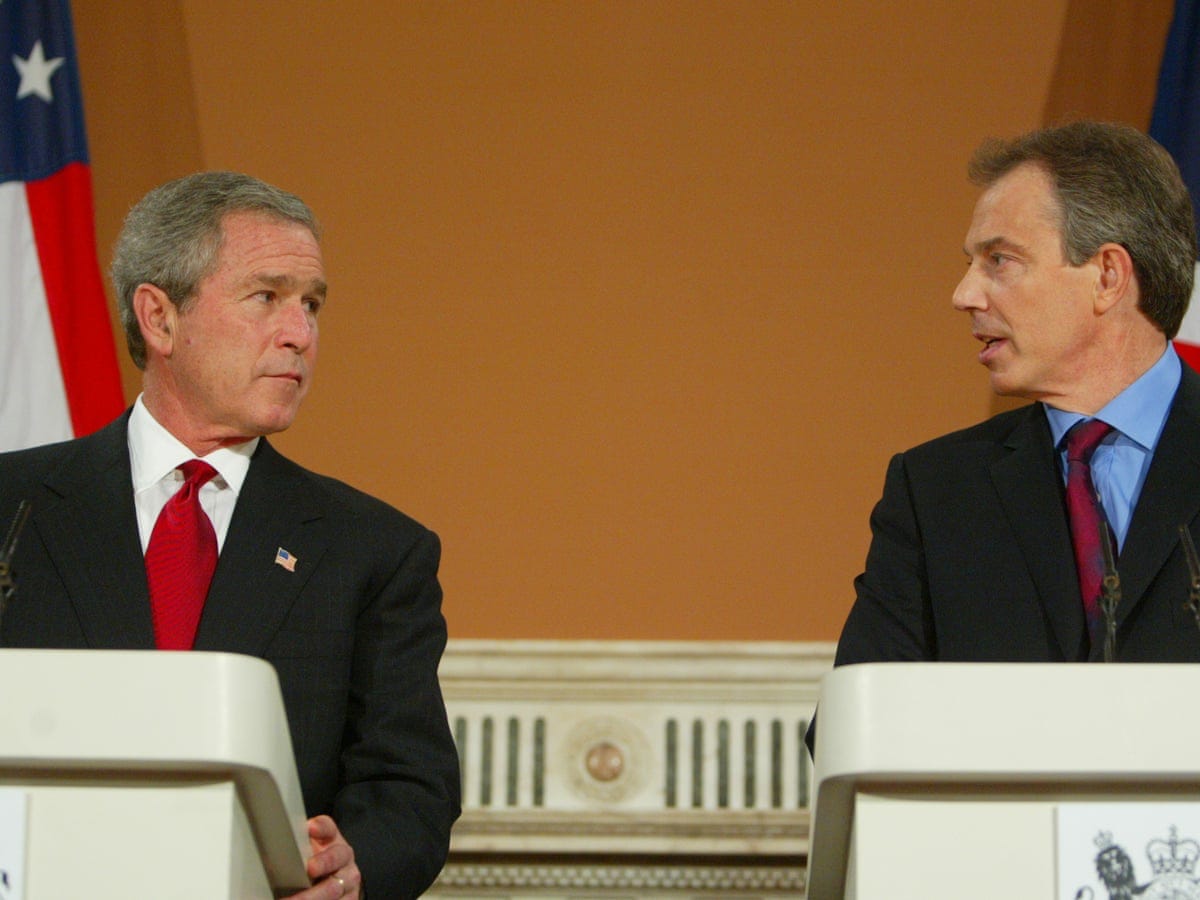
Iraq, Weapons of Mass Destruction and the Blair Credibility Question
Any assessment of Tony Blair’s judgement and credibility must confront the defining decision of his premiership: the 2003 invasion of Iraq.
Blair was not merely a passive supporter of the United States under President George W. Bush. He became one of the war’s most prominent advocates, repeatedly arguing that Iraqi dictator Saddam Hussein possessed weapons of mass destruction (WMDs) that posed a serious threat to international security.
Blair assured Parliament and the British public that intelligence indicated Iraq retained chemical and biological weapons capabilities and could potentially deploy some weapons within 45 minutes.
The central justification for war subsequently collapsed.
Following the invasion, extensive searches by the Iraq Survey Group found no active Iraqi WMD stockpiles. The intelligence assessments underpinning the case for war were shown to be flawed, exaggerated or based upon unreliable sources.
While Saddam Hussein’s regime had previously possessed chemical weapons and had obstructed international inspectors, the specific claims used to justify military action in 2003 proved to be fundamentally wrong.
The failure was so profound that it led to years of inquiries, culminating in the publication of the Chilcot Report, which concluded that peaceful options had not been exhausted and that the certainty with which the threat was presented was not justified by the intelligence available at the time.
Saddam Hussein was ultimately captured by US forces in December 2003, tried by an Iraqi tribunal and executed in 2006.
Blair and other supporters of the intervention have often pointed to the removal of a brutal dictator as a moral justification for the war. Critics counter that regime change was not the primary legal or political case presented to the British public before the invasion. Instead, the war was sold largely on the basis of an urgent security threat posed by weapons that were never found. For many observers, the distinction remains critical.
A war justified on one set of grounds cannot easily be retrospectively justified on another once the original claims collapse.
The consequences of the invasion extended far beyond Saddam’s removal. Hundreds of thousands of Iraqis were killed or displaced, sectarian violence exploded, state institutions collapsed and the instability that followed contributed directly to the emergence of extremist organisations including the so-called Islamic State.
The geopolitical shockwaves continue to influence Middle Eastern politics more than two decades later.
Even many former supporters of the intervention now acknowledge that the post-war planning was catastrophically inadequate and that the long-term consequences were profoundly underestimated.
This history matters because Blair continues to present himself as a trusted authority on major geopolitical and technological questions.
His supporters argue that he acted in good faith on the basis of intelligence available at the time. His critics make a different argument: that Iraq demonstrates how certainty, elite consensus and claims of expertise can be dangerously wrong. Blair was not a marginal commentator who made an inaccurate prediction.
He was a prime minister who advocated military action on the basis of assessments that proved false, with consequences measured in lives, regional instability and strategic failure.
For those examining Blair’s contemporary interventions on artificial intelligence, climate policy, Middle East governance, Palestine or global security, Iraq serves as an unavoidable cautionary tale.
It does not automatically mean that every argument Blair makes today is incorrect. It does, however, provide a powerful reason for scepticism. The Iraq experience reminds us that influential figures can be sincerely convinced, widely supported by experts and institutions, and still be catastrophically mistaken. When Tony Blair asks the public to trust his judgement today, many will inevitably view that request through the lens of the most consequential misjudgement of his political career.
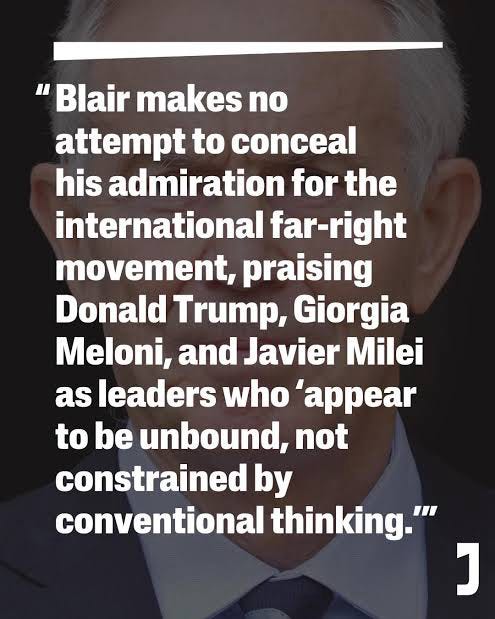
Beefy’s Conclusions: Blairism has transformed into a secret funded, dodgy, immoral, and elite brokerage
Tony Blair’s post-premiership career has turned the language of reform into a global influence product.
His institute speaks of delivery, technology, modernisation and pragmatic governance. But behind that vocabulary sits a harder reality: billionaire money, authoritarian-state relationships, Gulf entanglements, technology-sector interests, opaque advisory work and renewed proximity to Donald Trump’s geopolitical projects.
This does not mean every TBI employee is compromised or every TBI idea is worthless. It means the institution must be understood for what it is: a power broker, not a neutral think tank.
Saudi Arabia gains reformist language.
Kazakhstan gained international polish.
Ellison and Oracle sit close to an AI and public-data policy engine.
Trump’s Gaza project gained Blair’s elder-statesman gloss. Blair gains relevance, access and institutional scale.
The public gets policy arguments dressed as common sense but shaped inside a donor fog.
The wake-up call is simple.
When Tony Blair speaks, do not ask only whether the argument sounds modern, pragmatic or serious. Ask who paid for the platform, who benefits from the policy, who gains access to the state, and who is being laundered by association.
In the Blair model, influence no longer wears a party rosette. It wears a think-tank logo with hidden donors, it masquerades the language of reform and enters governments through the side door. And it doesn’t serve your interests - but the interests of billionaires, autocracies and murderers.
References and Sources:
[1] SourceTony Blair Institute, Financial Statements for year ending 31 December 2024.
[2] Tony Blair Institute, 2024 signed financial statements PDF.
[3] Tony Blair Institute, Financial Statements for year ending 31 December 2023.
[4] Tony Blair Institute, Financial Statements for year ending 31 December 2022.
[5] Tony Blair Institute, Financial Statements for year ending 31 December 2020.
[6] The Guardian, “Blair’s net zero intervention invites scrutiny of his institute’s donors.”
[7] The Guardian, “The complex and corporate rise of the Tony Blair Institute.”
[8] Lighthouse Reports, “Blair and the Billionaire.”
[9] Financial Times reporting on Larry Ellison pledges and donations to TBI.
[10] Reuters, Oracle chairman Larry Ellison’s history of support for Trump.
[11] Reuters, Trump announces private-sector AI infrastructure investment involving Oracle.
[12] The Register, Ellison comments on Oracle cloud, AI and surveillance.
[13] Tony Blair Institute, “A New National Purpose: Harnessing Data for Health.”
[14] Tony Blair Institute, “Preparing the NHS for the AI Era: A Digital Health Record for Every Citizen.”
[15] Tony Blair Institute, “Governing in the Age of AI: Building Britain’s National Data Library.”
[16] Financial Times, Saudi-linked donation to Tony Blair Institute.
[17] The Telegraph, Blair advising Saudi government in reported £9 million deal.
[18] The Guardian, “Tony Blair Institute continued taking money from Saudi Arabia after Khashoggi.”
[19] OHCHR, inquiry into killing of Jamal Khashoggi.
[20] US Director of National Intelligence, assessment of Saudi role in Khashoggi killing.
[21] Committee to Protect Journalists, Jamal Khashoggi case file.
[22] Freedom House, Saudi Arabia country report 2025.
[23] Human Rights Watch, Saudi Arabia World Report 2025.
[24] The Guardian, Tony Blair oil lobbying and fossil-fuel industry criticism.
[25] OCCRP, Tony Blair advised Kazakh president for estimated millions.
[26] Freedom House, Kazakhstan country report 2025.
[27] Human Rights Watch, Kazakhstan World Report 2025.
[28] Reuters, Russia-Kazakhstan energy and gas ties.
[29] Reuters, Russia agreement to build Kazakhstan nuclear power plant.
[30] International Criminal Court, arrest warrant against Vladimir Putin.
[31] Reuters, ICC arrest warrant against Putin over alleged war crimes.
[32] Reuters, Trump holds Gaza policy meeting with Tony Blair and Jared Kushner.
[33] Reuters, Blair eyes key Gaza role under Trump peace plan.
[34] Reuters, US proposal for temporary Gaza governance including Blair and Trump.
[35] Reuters, US names Rubio, Blair, Kushner and others to Gaza Board under Trump plan.
[36] Tony Blair Institute, Blair statement following White House announcement.
[37] Financial Times, reporting on Board of Peace fund and Gaza financing opacity.
[38] The Guardian, Tony Blair think tank worked with project developing “Trump Riviera” Gaza plan.
[39] The Guardian, Blair urges Labour to abandon net zero orthodoxy and support Trump-style politics.
Full URL references
[1] https://institute.global/financial-statements-year-ending-31-december-2024
[3] https://institute.global/financial-statements-year-ending-31-december-2023
[4] https://institute.global/financial-statements-year-ending-31-december-2022
[5] https://institute.global/financial-statements-year-ending-31-december-2020
[7] https://www.theguardian.com/politics/2023/sep/17/tony-blair-institute-rise
[8] https://www.lighthousereports.com/investigation/blair-and-the-billionaire/
[9] https://www.ft.com/content/ae2cfbd4-0aa2-4437-8bcd-bfb00c6f8454
[16] https://www.ft.com/content/6426466c-b12c-11e8-99ca-68cf89602132
[19] https://www.ohchr.org/en/special-procedures/sr-executions/inquiry-killing-mr-jamal-kashoggi
[21] https://cpj.org/data/people/jamal-khashoggi/
[22] https://freedomhouse.org/country/saudi-arabia/freedom-world/2025
[23] https://www.hrw.org/world-report/2025/country-chapters/saudi-arabia
[25] https://www.occrp.org/en/news/ex-uk-pm-tony-blair-advised-kazakh-president-for-estimated-291-mil
[26] https://freedomhouse.org/country/kazakhstan/freedom-world/2025
[27] https://www.hrw.org/world-report/2025/country-chapters/kazakhstan
[36] https://institute.global/insights/news/tony-blairs-statement-following-white-house-announcement
[37] https://www.ft.com/content/5ba3bd2c-0e0e-4306-84be-99d6d89b0d49